


| DONATION BUTTON |
| "The views expressed by others are not necessarily shared by me personally but all views and perspectives are respected" |
| HOME NEW POSTINGS CONSCIOUSNESS UFOs PHOTOGRAPHY CROP CIRCLE RESEARCH PRESENTATIONS FARM MONITOR STORE MEDIA BIOGRAPHY 2012 DEBATE CLIMATE CHANGE QUOTATIONS LETTERS BLOG CONTACT OBSERVATORY WELLNESS |
| The Monarch Butterfly: Numbers returning to Mexico are seriously down WHY? By Colin Andrews Thanks to National Public Radio (USA) and The Guardian (UK) Posted: March 22, 2013 |


The winter home of the Monarch butterfly was only discovered in 1979. This butterfly has been common in
North America until now. Its life span is around 7 months and it flies around 2,000 miles back to just a
couple of mountain tops in Mexico for winter. Each butterfly does not get to experience the complete two
way trip but each new baby knows exactly where to go, that being very common amongst numerous species.
Just two acres of mountain top in Mexico is winter home for all Monarch's but the last home run saw a
reduction of 59% making back to Mexico.
The study suggests climate change and the drastic changes in habitat is partly to blame. In part also is the
almost extinction of Milk Weed, as its name suggests, a weed which the young use for food. There has
always been enough Milk Weed to enable this create to get by but the increased use of targeted chemicals
has left few surviving stragglers around the field boundaries or on wild land.
I strongly recommend you listen to NPR radio interview of today, March 22, 2013 for more details:
North America until now. Its life span is around 7 months and it flies around 2,000 miles back to just a
couple of mountain tops in Mexico for winter. Each butterfly does not get to experience the complete two
way trip but each new baby knows exactly where to go, that being very common amongst numerous species.
Just two acres of mountain top in Mexico is winter home for all Monarch's but the last home run saw a
reduction of 59% making back to Mexico.
The study suggests climate change and the drastic changes in habitat is partly to blame. In part also is the
almost extinction of Milk Weed, as its name suggests, a weed which the young use for food. There has
always been enough Milk Weed to enable this create to get by but the increased use of targeted chemicals
has left few surviving stragglers around the field boundaries or on wild land.
I strongly recommend you listen to NPR radio interview of today, March 22, 2013 for more details:
| The Monarch butterfly, taken in our garden. Copyright: Colin Andrews |
| The Monarch feeding on Milk Weed - Copyright: Colin Andrews. |
The Guardian Newspaper (UK)
March 14, 2013
Mexican monarch butterfly numbers at record low, scientists say
This year's 59% drop in the wintering population in central Mexico marks the sixth decline in the past
seven years.
The colonies of migrating monarch butterflies that spend the winter in a patch of fir forest in central
Mexico were dramatically smaller this season than they have been since monitoring began 20 years
ago, according to the annual census of the insects released this week.
This year's 59% drop in the numbers of orange and black butterflies that sleep in huge clusters
hanging from the bows of the trees in the mountainside forests marks the sixth decline in the past seven
years.
It also fits into a longer term downward trend that scientists say is threatening the extraordinary annual
migrational phenomenon in which the butterflies, over the course of several generations, travel between
their winter sanctuary in Mexico and their feeding and breeding grounds in the United States and
Canada, and then back again.
The WWF, which carries out the census of the Mexican colonies in co-ordination with the Mexican
government, says the extensive use of herbicides is wiping out vast quantities of the milkweed that
provides the butterflies with their main food source and breeding grounds.
The use of herbicides destroying milkweed is directly linked to the mass cultivation in the great plain
states of the US of genetically modified soybean and corn crops with inbuilt resistance to chemicals that
the rest of the plants in the areas sprayed do not have. The WWF also noted usually hot and dry
weather that can kill the butterfly eggs.
The WWF's Mexico director, Omar Vidal, said the Mexican sanctuary was being well looked after, and
stressed that the mass illegal logging that once represented the main threat to it has been stopped.
"By protecting the reserves and having practically eliminated large-scale illegal logging, Mexico has
done its part," Vidal said. "It is now necessary for the United States and Canada to do their part and
protect the butterflies in their territories."
But not all experts agree that Mexico has done all it can to protect the monarchs.
"It is a whitewash by the World Wildlife Fund and the Mexican government," the leading monarch expert
Lincoln Brower of Sweet Briar College in Virginia said. "They are playing down and ignoring the
continued degradation of the microclimate of the forest that is critical to the butterflies."
Brower, who has been studying monarch migration for 55 years, said he personally witnessed the
continuation of small-scale logging in the reserve while on a visit in February, acting as a guide to
former US president Jimmy Carter. He said that even small reductions of the forest cover can expose
the butterflies to potentially fatal lower temperatures, humidity, and direct sunlight.
He added that the authorities are allowing local communities to pipe water out of streams that are also
essential to the survival of the colonies, and that there are insufficient controls on tourism in the area.
Brower called for more cross-border co-operation to address all the threats to the butterfly. "The
numbers are getting so slow now that the migratory phenomenon of the monarch is becoming
endangered," he said. "It is looking like the glorious migration phenomenon will begin to peter out."
Source.
March 14, 2013
Mexican monarch butterfly numbers at record low, scientists say
This year's 59% drop in the wintering population in central Mexico marks the sixth decline in the past
seven years.
The colonies of migrating monarch butterflies that spend the winter in a patch of fir forest in central
Mexico were dramatically smaller this season than they have been since monitoring began 20 years
ago, according to the annual census of the insects released this week.
This year's 59% drop in the numbers of orange and black butterflies that sleep in huge clusters
hanging from the bows of the trees in the mountainside forests marks the sixth decline in the past seven
years.
It also fits into a longer term downward trend that scientists say is threatening the extraordinary annual
migrational phenomenon in which the butterflies, over the course of several generations, travel between
their winter sanctuary in Mexico and their feeding and breeding grounds in the United States and
Canada, and then back again.
The WWF, which carries out the census of the Mexican colonies in co-ordination with the Mexican
government, says the extensive use of herbicides is wiping out vast quantities of the milkweed that
provides the butterflies with their main food source and breeding grounds.
The use of herbicides destroying milkweed is directly linked to the mass cultivation in the great plain
states of the US of genetically modified soybean and corn crops with inbuilt resistance to chemicals that
the rest of the plants in the areas sprayed do not have. The WWF also noted usually hot and dry
weather that can kill the butterfly eggs.
The WWF's Mexico director, Omar Vidal, said the Mexican sanctuary was being well looked after, and
stressed that the mass illegal logging that once represented the main threat to it has been stopped.
"By protecting the reserves and having practically eliminated large-scale illegal logging, Mexico has
done its part," Vidal said. "It is now necessary for the United States and Canada to do their part and
protect the butterflies in their territories."
But not all experts agree that Mexico has done all it can to protect the monarchs.
"It is a whitewash by the World Wildlife Fund and the Mexican government," the leading monarch expert
Lincoln Brower of Sweet Briar College in Virginia said. "They are playing down and ignoring the
continued degradation of the microclimate of the forest that is critical to the butterflies."
Brower, who has been studying monarch migration for 55 years, said he personally witnessed the
continuation of small-scale logging in the reserve while on a visit in February, acting as a guide to
former US president Jimmy Carter. He said that even small reductions of the forest cover can expose
the butterflies to potentially fatal lower temperatures, humidity, and direct sunlight.
He added that the authorities are allowing local communities to pipe water out of streams that are also
essential to the survival of the colonies, and that there are insufficient controls on tourism in the area.
Brower called for more cross-border co-operation to address all the threats to the butterfly. "The
numbers are getting so slow now that the migratory phenomenon of the monarch is becoming
endangered," he said. "It is looking like the glorious migration phenomenon will begin to peter out."
Source.
| "The use of herbicides destroying milkweed is directly linked to the mass cultivation in the great plain states of the US of genetically modified soybean and corn crops with inbuilt resistance to chemicals that the rest of the plants in the areas sprayed do not have".... |
| By protecting the reserves and having practically eliminated large-scale illegal logging, Mexico has done its part," Vidal said. "It is now necessary for the United States and Canada to do their part and protect the butterflies in their territories." |
| Its ironic that the fate of the butterfly was largely at risk because of large scale illegal logging in Mexico, which has now been successfully stopped - new risks have taken its place in the USA and Canada by the wide scale use of chemicals and genetically modified plants. - More must be done, the fight goes on to save this creature and many others in the chain. - We MUST intervene because nature can not remedy what she did not create. Colin Andrews, March 22, 2013 |

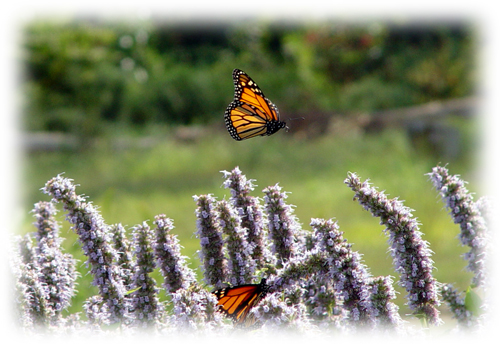
| Taken Guilford, CT, USA. Copyright: Colin Andrews |
| A popular migration route takes them to Lighthouse Point, near New Haven, Connecticut as they push south and west down the US East Coast, where I took this photo. Copyright: Colin Andrews 2008. |
| Monarch Butterfly under threat HERE |
| When most of our amazing creatures have gone, and our landscape becomes eerily devoid of life and sound, will the biotechnology companies like Monsanto and DuPont etc still be around to own their place in history? - I hope not but if there is still money to be made and the fat cats are among those of us left, perhaps they will. Benefits v Risks below CA. |


| Sources for Genetically Modified Plants Graphics Above: • http://www.ornl.gov/sci/techresources/Human_Genome/elsi/gmfood.shtml • http://www.greenfacts.org/en/gmo/2-genetically-modified-crops/1-agricultural-biotechnology.htm#0 • http://recipes.howstuffworks.com/question148.htm • http://www.trendhunter.com/trends/blue-rose-is-here • Whitman, Deborah. Genetically Modified Foods: Harmful or Helpful. April 2000. http://www.csa.com/discoveryguides/gmfood/overview.php |